
 EN
EN
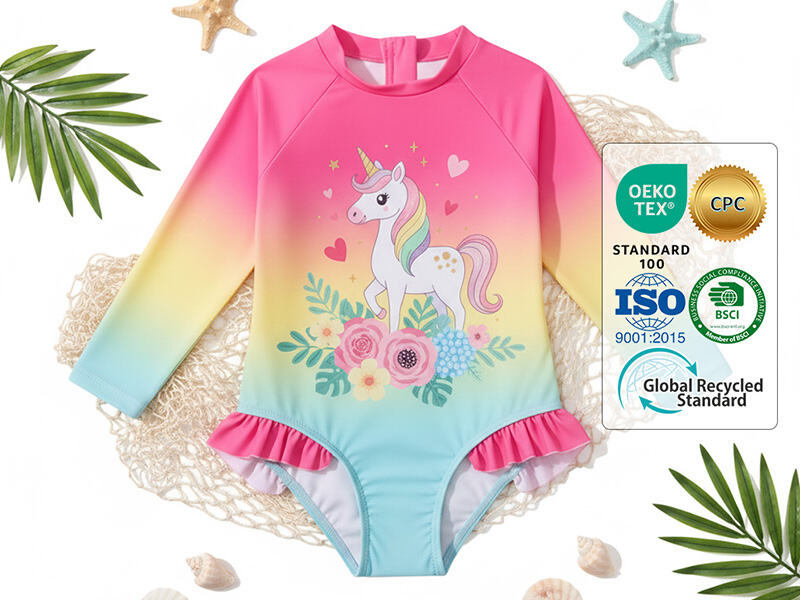
Core OEM Capabilities for Rash Guards and Kids Swimwear
Swimwear-Specific Fabric Expertise: Nylon, Spandex, and Polyester Blends for Rash Guards
When it comes to choosing an OEM partner, their experience with technical swimwear materials really matters. Good manufacturers know how to mix different fibers properly. They combine nylon which gives strength and dries fast, spandex that allows the fabric to stretch in all directions, and some polyester too since it helps resist UV damage and keeps colors looking better longer. A great combination might be around 78% recycled nylon plus about 22% Lycra. This kind of blend holds up against both pool chemicals and ocean saltwater, plus moves comfortably when kids are playing or swimming. The fabric should definitely meet UPF 50+ standards so it blocks nearly all harmful UV rays from reaching sensitive skin areas. Using inferior textiles can lead to problems like colors fading quickly, fabric losing its stretch after just a few uses, or not providing enough protection against sunburns during outdoor activities.
Child-Safe Design & Performance: Fit, UPF rating, seam durability, and chemical compliance
How products are designed really matters when it comes to staying safe and comfortable. The flatlock seams we use stop that annoying chafing during all sorts of physical activities, while getting rid of those pesky tags means no more spots where skin gets irritated. We put everything through extensive tests too. For instance, our materials stand up to chlorine exposure just fine, even after what amounts to over 100 washes in a pool environment. And those seams hold their strength despite constant stretching and pulling. Speaking of chemicals, we make sure nothing bad touches anyone's skin. That's why our stuff carries the OEKO-TEX Standard 100 certification, which means absolutely no harmful dyes or treatments anywhere near where skin makes contact. Getting the right balance between being tight enough for performance but still flexible enough for freedom of movement helps cut down on water resistance without making anyone feel restricted. Safety and fun go hand in hand with this approach.
Rigorous Quality Assurance for Rash Guard Durability and Safety
Chlorine, saltwater, and UV resistance testing protocols for long-lasting rash guards
To make sure products stand up to actual conditions, manufacturers run several rounds of testing. When it comes to chlorine resistance, the standard test mimics about half a year of regular pool usage. Premium materials should maintain at least 85% of their original tensile strength after exposure. For saltwater durability, fabrics get dunked repeatedly to see if colors stay vibrant and stretch remains intact even after over fifty washing sessions. Sun protection claims aren't just marketing fluff either. Labs actually perform detailed light spectrum checks on different fabric types to verify that UPF 50+ ratings hold true throughout multiple seasons of wear and tear. This kind of thorough evaluation gives consumers peace of mind knowing their gear will protect against harmful rays year after year.
Critical certifications: OEKO-TEX Standard 100, Disney FAMA, and BSCI for kids’ apparel
When it comes to safety and ethical standards, third party certifications offer an outside perspective that consumers can actually trust. Take OEKO-TEX Standard 100 for example. This certification checks whether fabrics have dangerous amounts of more than 350 different chemicals, including stuff like heavy metals and bad dyes, all tested by labs that aren't connected to the companies themselves. Then there's Disney's FAMA program which requires manufacturers to undergo regular inspections and track where every component in their licensed merchandise actually comes from. The BSCI certification looks at how well companies treat their workers, making sure people get paid fairly, work in safe environments, and aren't forced into any kind of exploitative labor situations. All these different programs help maintain global safety benchmarks and give parents peace of mind knowing what they're buying for their kids is actually safe and responsibly made.
Sustainable and Ethical Manufacturing Practices
Recycled nylon (e.g., ECONYL®) and eco-conscious innovations in rash guard production
Top brands have started incorporating ECONYL® into their products lately. This recycled material comes from plastic waste collected from oceans and old fishing nets, helping cut down on environmental damage without sacrificing quality. The stuff actually holds up just as well as regular nylon in terms of strength and flexibility, plus it saves half the water usage and slashes energy needs by around two thirds compared to traditional methods. Many ethical production facilities go even further by implementing water recycling systems and using safe, non-harmful coloring agents that stop harmful chemicals from getting washed away. This matters a lot for items like rash guards which sit against skin all day long. Companies looking to prove they're serious about sustainability often check off their supply chains through independent verification programs such as GRS certification. And let's face it, with nearly four out of five parents making eco friendliness a priority when shopping for children's swimwear these days, adopting greener manufacturing processes makes good business sense too.
Operational Fit for Growing Brands: MOQs, Lead Times, and Partnership Transparency
For growing brands looking to scale, finding the right OEM partner matters a lot. They need someone who gets how businesses actually work day to day. That means offering flexible minimum order quantities so new brands can figure out what works without getting stuck with tons of inventory they can't sell. Established companies benefit too when they have scalable options for those busy seasons. Most good manufacturers will commit to around 8 to 12 weeks for first production runs, which helps fashion brands plan ahead for their summer lines and coordinate marketing efforts properly. What makes a real difference though is when partners share production updates as things happen, make quality reports easy to access, and jump on problems before they become disasters. This kind of relationship isn't just about transactions anymore but actual growth together. Industry data from 2024 shows that brands working with aligned manufacturers see about 23% fewer stockout issues and create significantly less wasted product sitting on shelves.
FAQs
What is UPF in swimwear?
UPF stands for Ultraviolet Protection Factor. It indicates how well fabric protects the skin from UV rays. UPF 50+ means the fabric blocks over 98% of the sun's harmful rays.
Why is OEKO-TEX certification important?
OEKO-TEX Standard 100 certification ensures textiles are free from harmful chemicals, making them safe for contact with skin, especially important for children's apparel.
How does ECONYL® contribute to sustainability?
ECONYL® is made from recycled materials like ocean waste and fishing nets. It reduces environmental impact while maintaining durability and strength in swimwear fabrics.