
 EN
EN
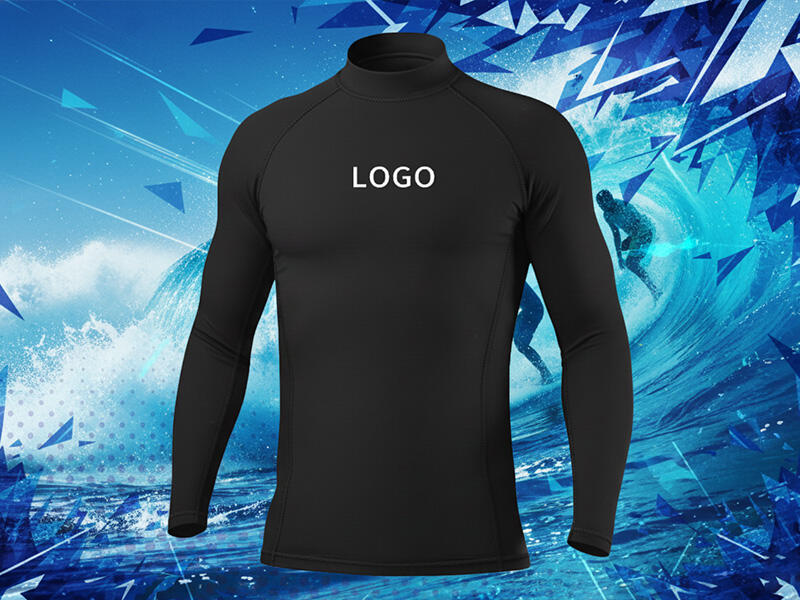
Understanding Rashguard Fabric Breathability and Material Science
What makes a rashguard breathable?
How breathable a rashguard feels depends on several factors including how porous the fabric is, how well it pulls moisture away from skin, and just how much air can pass through it. Sure, what the garment is made of matters somewhat, but really the big difference comes down to how it's constructed. Take knit density for instance. A recent study published in the 2024 Fabric Performance Report found something interesting about hexagonal knit patterns. These special designs actually help sweat evaporate about 37 percent faster than regular weaving methods do. This shows why paying attention to how fabrics are structured makes such a difference when talking about comfort during activity.
The role of fabric composition in thermal regulation
Fiber blends significantly impact heat management. Polyester, being hydrophilic, uses capillary action to draw moisture away from the skin, while nylon-spandex blends offer stretch without sacrificing breathability. Laboratory testing shows that polyester-dominant fabrics (85% polyester/15% spandex) maintain surface temperatures 1.5°C lower than pure nylon versions during intense activity.
Comparing breathability across common materials: nylon, polyester, and spandex
| Material Blend | Air Permeability (CFM*) | Moisture Evaporation Rate | Thermal Retention |
|---|---|---|---|
| 80% Nylon/20% Spandex | 12.7 | 0.28 g/min | Moderate |
| 88% Polyester/12% LY** | 15.3 | 0.41 g/min | Low |
| 90% Polyester/10% Spandex | 14.9 | 0.39 g/min | Low-Moderate |
Cubic Feet per Minute | **Lycra® equivalent elastane
Data sourced from Sportswear Materials Analysis, 2023
Scientific data on air permeability in performance swimwear fabrics
Premium rashguard fabrics achieve Moisture Vapor Transmission Rates (MVTR) of 1,200–1,500 g/m²/24hr–comparable to technical hiking apparel. Research confirms that directional yarn alignment improves airflow by 22% without compromising UV protection. Innovations in microfiber treatments have also reduced surface friction drag by 18%, maintaining breathability under dynamic conditions.
Moisture-Wicking and Ventilation Technologies in Rash Guards
How Moisture-Wicking Technology Enhances Comfort During Activity
Moisture-wicking works through capillary action, moving sweat through microscopic fabric channels to accelerate evaporation. This prevents saturation, which can reduce thermal efficiency by 30–50%. High-performance rashguards combine hydrophobic polyester fibers with hydrophilic coatings to maximize both moisture displacement and drying speed.
Evaluating Moisture Management in Nylon-Spandex vs. Polyester Blends
| Property | Nylon-Spandex Blend (80/20) | Polyester Blend (85/15) |
|---|---|---|
| Drying Time | 8-12 minutes | 6-9 minutes |
| Moisture Retention | 18% | 12% |
| Wicking Efficiency | 0.28 ml/s | 0.35 ml/s |
Nylon-spandex offers superior stretch recovery but retains 50% more moisture than polyester during high-intensity use.
Mesh Ventilation Zones and Their Impact on Cooling Efficiency
Strategically placed mesh panels increase airflow by 40–60% in high-heat zones like the upper back and sides. A 2023 study found that surfers wearing mesh-equipped rashguards maintained skin temperatures 2.3°C lower over 90-minute sessions compared to solid-panel designs.
Strategic Panel Placement and Heat-Venting Design for Enhanced Airflow
Advanced rashguards use anatomical patterning to align vents with major sweat glands and blood vessels. Underarm gussets and posterior vent channels create convection currents that remove heat 27% faster than uniform weaves, all while preserving durability in high-abrasion areas.
Optimal Fit and Design Features for Maximum Breathability
The science behind compression fit and airflow dynamics
Compression fit enhances airflow by minimizing fabric flutter and maintaining a consistent microclimate against the skin. A 2024 textile engineering study showed these garments improve air circulation efficiency by 15–20% through tension points that guide heat upward. However, elastane content exceeding 20% can reduce breathability by 12% due to restricted pore expansion.
Avoiding overheating: Why loose weaves don't always mean better ventilation
Loose-knit fabrics may feel airy initially, but humidity chamber tests reveal they exhibit 22% lower moisture vapor transmission rates than engineered tight weaves. Poor airflow regulation traps sweat in macro-pores, creating a false sense of breathability.
Do ventilation cuts compromise durability? A balanced analysis
Laser-cut ventilation reduces stress concentrations by 40% compared to sewn mesh inserts. Although micro-perforations decrease tear strength by 8% in lab settings, real-world wear studies show no significant lifespan difference when placed outside high-friction zones like shoulders and hips.
Key design features that enhance breathability without sacrificing performance
Four innovations define modern breathable rashguards:
- Directional texture weaves that channel sweat toward evaporation zones
- Mesh placement along lateral torso lines, where 68% of body heat escapes
- Variable-density stitching for impact zone rigidity and chest flexibility
- Phase-change material interlayers absorbing 17% more heat than conventional liners
These advancements enable UL-certified UPF 50+ protection with less than 2% moisture retention during continuous activity.
Rashguards for Hot Climates: Performance Needs and Top Recommendations
Key Features of Rash Guards Optimized for High Heat and Humidity
Rashguards designed for tropical climates emphasize rapid moisture dispersion and enhanced airflow. Studies indicate high-performance blends lower skin temperature by 2–3°C compared to standard fabrics (Textile Performance Institute 2023). Essential features include:
- Asymmetrical mesh panels in high-sweat areas (armpits, lower back)
- UPF 50+ protection with 15% elastane to prevent sagging
- Flatlock seams to minimize chafing during extended wear
Why 80% Nylon / 20% Spandex Is Favored for Tropical Climates
This blend dominates tropical designs because nylon dries 96% faster than polyester under 85% humidity. The 20% spandex maintains compression while creating a 0.3 mm air gap that supports evaporative cooling, as noted in the 2024 Swimwear Materials Report.
Top-Rated Breathable Rash Guards for Surfers in Southeast Asia
Leading tropical-performance models share three critical attributes:
| Feature | Performance Benefit | Humidity Adaptation |
|---|---|---|
| Laser-cut ventilation | 40% better airflow vs. standard designs | Reduces cling in water |
| Antibacterial treatment | 99% odor reduction after 8hr use | Prevents mildew |
| Strategic perforations | Targets lymphatic zones for 18% faster cooling | Complements body heat maps |
Trend Analysis: Ultralight, Quick-Dry Materials Gaining Market Share
Ultralight micro-polyester blends now represent 34% of premium rashguards sold in Indonesia and Thailand, drying 22% faster than traditional nylon-spandex while delivering equivalent UV protection. Emerging phase-change materials absorb up to 150 J/g of heat during peak exertion–triple the capacity of conventional fabrics (2023 Apparel Materials Report).
Step-by-Step Guide to Choosing the Most Breathable Rashguard
Step-by-Step Checklist for Evaluating Breathability Before Purchase
Begin by reviewing fabric composition. Nylon-spandex blends (80/20) are ideal for balancing stretch and breathability. Use the "hand blow" test: press the fabric to your mouth and exhale–optimal materials allow quick air passage. Prioritize third-party certifications such as the Moisture Management Index (MMI ¥ 0.8 recommended for high-heat activities).
Balancing Breathability With UV Protection, Durability, and Sport-Specific Needs
The 95% polyester material works great against UV rays but can actually hold onto heat when it's humid out there. Surfers hitting the waves in places like Bali or Thailand need to think about getting gear with at least SPF 50 protection. Flatlock seams matter too since they prevent chafing during long sessions. Some brands now add mesh vents in key spots, and according to that Activewear Performance Study from last year, this design tweak helped people stay cooler by almost three quarters. For those diving deep underwater or training for mixed martial arts competitions, look for extra reinforcement on shoulder areas where most of the wear happens. The stitching in these stress points makes all the difference over time.
Expert Recommendations Based on Water Sport Type and Environment
Open-water swimmers benefit from tighter weaves (20% porosity) to resist wind chill, whereas tropical snorkelers perform better with ultra-light nylon (120–140 gsm). Cold-water athletes should layer breathable base fabrics under neoprene, following best practices outlined in Textile Intelligence's 2024 Thermal Regulation Guide.
Future Trends: Smart Textiles and Phase-Change Materials in Rash Guards
Emerging smart textiles feature cellulose-based nanocoatings that dynamically adjust porosity based on sweat levels. Early trials of phase-change materials (PCMs) demonstrate 19% longer thermal comfort in 90°F/32°C conditions versus traditional fabrics. Though still emerging, these technologies are projected to capture 35% of the performance swimwear market by 2027.
FAQ
What are rashguards made of?
Rashguards are typically made from blends of nylon, polyester, and spandex, each contributing to different properties like moisture-wicking, breathability, and stretch.
How does fabric composition affect breathability?
Fabric composition, such as using nylon-spandex or polyester blends, significantly impacts breathability by managing moisture evaporation, air permeability, and thermal regulation.
What is the ideal blend for tropical climates?
An 80% Nylon / 20% Spandex blend is favored for tropical climates due to nylon's faster drying properties and the spandex's ability to support evaporative cooling.
How can I test a rashguard's breathability before buying?
You can use the "hand blow" test or check for third-party certifications like the Moisture Management Index to understand material breathability.
What innovations are enhancing rashguard breathability?
Innovations such as directional texture weaves, mesh placements, and phase-change material interlayers enhance breathability while maintaining performance.
Table of Contents
- Understanding Rashguard Fabric Breathability and Material Science
- Moisture-Wicking and Ventilation Technologies in Rash Guards
- Optimal Fit and Design Features for Maximum Breathability
- Rashguards for Hot Climates: Performance Needs and Top Recommendations
- Step-by-Step Guide to Choosing the Most Breathable Rashguard
- FAQ